
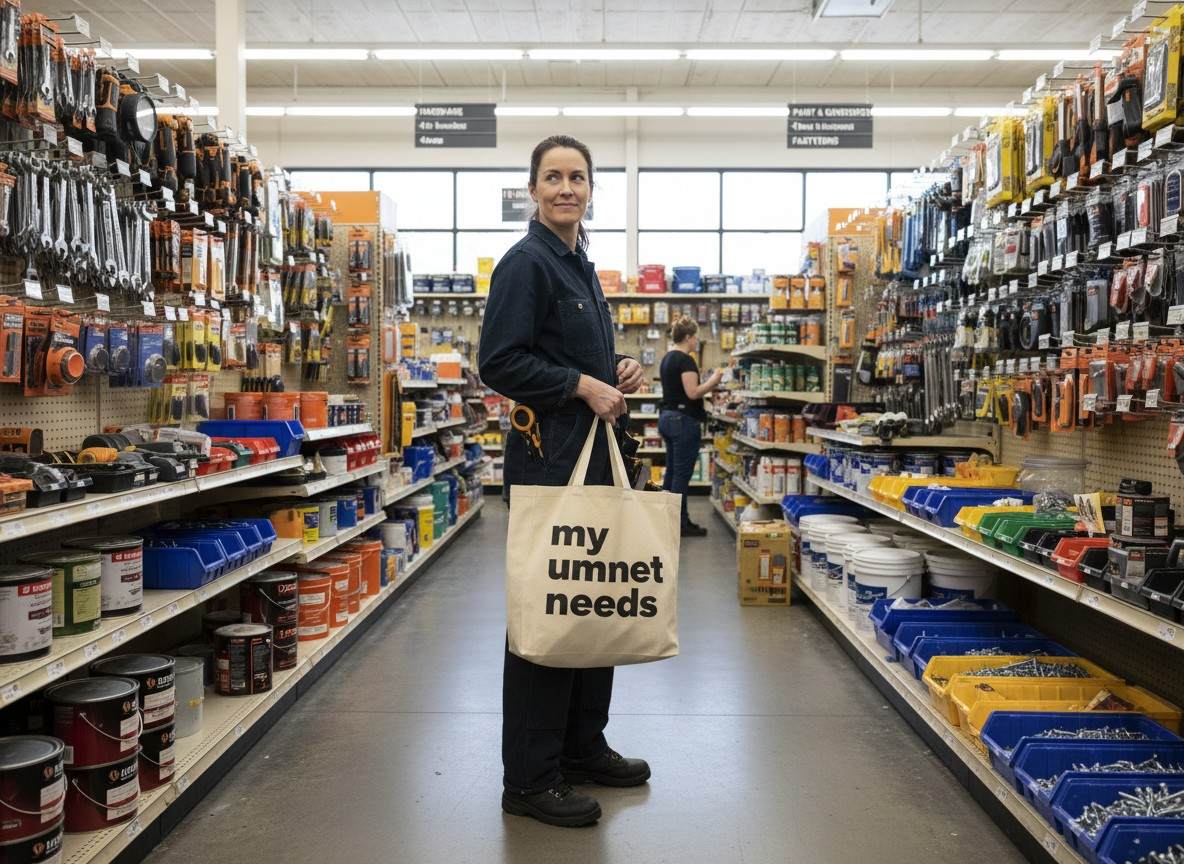
Are you going to the DIY Shop to buy milk?
Not my analogy but one that I have stolen and which I use often in coaching.
I recently suggested to a client that she was, in fact, going to the DIY shop to buy milk… did she agree with me? Yes, she did.
Wouldn’t it be wonderful if, in life, we found ‘our person’ and it turned out that they met every single on of our needs. Presumably, that does happen for a minority of people. For the rest of us, it’s highly unlikely.
Expecting one person to meet every need is like going to the DIY shop to buy milk. The problem isn’t that the shop doesn’t stock a good range of really useful things; it’s that you’ve gone there expecting it to provide you with something it was never going to be able to provide.
In relationships, if we put too much expectation on somebody, to them it can feel like:
“I’m being asked to provide something I simply don’t have.”
If that expectation keeps happening, they may start to feel inadequte and frustrated because no matter how much they give, they’re being judged for what they don’t provide.
In reality, different people and parts of our lives can provide different things. Your partner, for example, can be your partner without having to be your entire support system.
And sometimes, a partner isn’t being asked just to be a partner but they’re unconsciously being asked to repair something that existed long before we met them. That can be an enormous burden for the other person, because they can love you deeply without being capable of healing what they didn’t cause.
Confronting unmet needs is, however, essential in a healthy relationship – the key is understanding that confrontong a need doesn’t mean demanding that your partner personally fills every gap.
Say, for example, that you’re a person who doesn’t do well with long silences – but your partner is someone who is comfortable with them and doesn’t tend to do ‘small talk’. Your insecurities around this may mean you need a little bit of reassurance that everything is ‘alright’.
You can express this in an adult to adult conversation:
“This need matters to me so I will be checking in with you from time to time for that reassurance.”
For the actual small talk, maybe you can have this need met with other family members or a group of friends.
The “hardware store” analogy is about compatibility or specialisation: a partner may not be able to provide something you need and it can be reasonable to recognize that limitation rather than expecting them to become someone they aren’t.
But basic needs being chronically unmet is different. If the relationship leaves you without things that are fundamental to feeling safe, loved, respected, emotionally connected, or supported, the issue isn’t necessarily that you’re asking the wrong person for the wrong thing – it may be that the relationship itself isn’t providing the fundamentals.
Book a FREE 30 Minute Taster Session